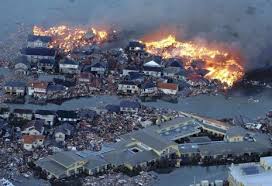
On Monday April 20, a mega earthquake hit the northeastern part of Japan, near the city of Miyako. The earthquake was measured to be 7.7 magnitude, something that could compare to a disaster that can take out an entire state.
Maira Butt & Maroosha Muzaffar, reporters from ‘Independent’ explain the situation.
“Monday’s tremor struck at 4.53pm local time off the northeastern coast of Japan’s Sanriku and 330 miles from the country’s capital, Tokyo, with an epicenter in the Pacific Ocean measured at a depth of around 20km,” the reporters explained. 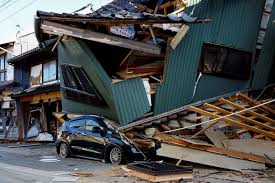
Luckily, the earthquake took place off the coast of Japan in the Pacific Ocean. Even though this was the case, the power and size of the earthquake caused many issues for the towns and cities on the coast on Japan.
Flood and Tsunami warnings were issued hours later to the 180 towns close to the coast and people living in those places were warned to continue their daily life with caution.
Dashiel Pierson, a reporter from ‘Surfer’ explains the danger of the tsunamis.
“Waves up to 80 cm (2.6 feet) were recorded at Kuji Port in Iwate Prefecture,” explained Pierson. “Officials are preeminently preparing for aftershocks and tsunamis by evacuations.”
As of Thursday, the threat of another mega earthquake shot up, as the first earthquake on Monday caused the chance for a follow-up earthquake, more powerful than the other, to go from 0.1% to a one percent. But the tsunami warnings stopped after this revelation.
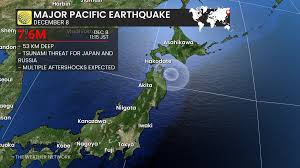
More and more people move out of the coastal areas near the Pacific as over 200 towns got warnings from Japan’s government to evacuate until the situation calmed down.
Reporters from ‘News8Now’ explain the threat of another possible earthquake hitting Japan.
“The Japanese government has warned of a slightly heightened risk of a megaquake in the next week after a strong 7.4-magnitude earthquake struck off the country’s northeastern coast on Monday,” explained the reporters.
Japan is a country that is prone to earthquakes due to its place on the planet, it lies on ‘The Pacific Ring of Fire,’ where three-four tectonic plates meet, causing increased geological activity.
Japan has experienced 25% of the world’s earthquakes, causing shift of the ground in Japan, some places even having three feet higher ground than it was prior to the earthquake.