Each December, the Army-Navy game brings together two service academies for a rivalry that is defined not just by competition, but by tradition. From the moment that the stadium begins to fill it is not an ordinary game day.
One of the most powerful traditions is the march on, when the cadets and midshipmen enter the stadium in their formations. This is more than just a pregame ritual, but it is a visual representation of the discipline and commitment of the students. As thousands of cadets and midshipmen move in unison and remind spectators that the players on the field are the future officers who already dedicated themselves to service.
Another tradition often referred to as the “prisoner exchange” is unique to this rivalry. Prior to the game, exchange students who spent the semester at the opposite academy returned for the first time since the semester began. The cadets and midshipmen also tape a message or lighthearted joke on their backs for the crowd to see. This moment is met with loud cheers as the cadets and midshipmen welcome back their classmates.
The fly over is another tradition prior to the Army-Navy game. The aircrafts soar above the stadium and out of some drop army cadets and midshipmen parachuters. These individuals present a game ball for their team. The flyover is another reminder of the dedication and strength of the armed forces, drawing a response out of both sides of the crowd.
Adding to the importance of the event, the President was in attendance. His presence emphasizes that the Army-Navy Game is more than a college matchup, but a national tradition that honors their service and sacrifice. It is America’s Game. This recognition underscores the respect the rivalry commands across the country.
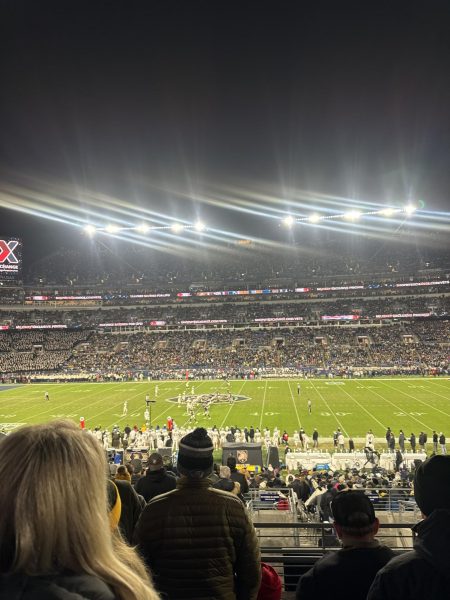
What truly sets this game apart, however, is the atmosphere among fans. Unlike many intense rivalries there may be hostility within the stands. On the other hand, Army and Navy fans sit side by side, sharing conversations and cheering respectfully. There’s a collective understanding that everyone present is connected by a shared respect for the service. The absence of hatred and the presence of sportsmanship create an environment that feels rare in modern sports and reinforces the idea that this rivalry is built on honor.
Watching the Army-Navy game for the second time as both a spectator and a sister made the traditions feel even more powerful. Seeing the march-on, the exchange and the flyover prior to the game reinforced that everything was intentional. These moments connect students, families, alumni and fans, creating a shared experience rooted in our history and honor.
In the end the Army-Navy game is defined by far more than football. It’s traditions, respectful rivalry and a unique sense of unity that sets it apart from any sporting event.