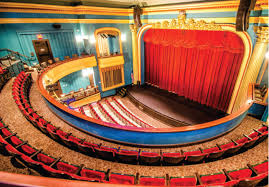
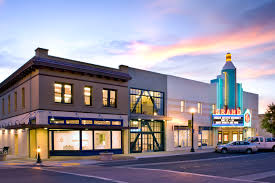
In the heart of downtown Tracy, California, lies the Grand Theatre Center for the Arts, which contains a rich history dating back to the early 20th century that has left a legacy of inspiring impact that lives on to this day.
Constructed in 1923, the theater was originally designed as a half vaudeville house by architect Albert W. Cornelius, with a classical architecture design. John C. Droge, an entrepreneur of the time, had decided on the project. Later, the Theatre turned into a room to show “talkies”, a type of silent film popular at the time.
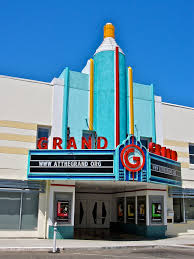
Then, in the early 1940s, there was a large remodel that incorporated a “bold new art deco” design. From then until 1977, the theater was used as a movie house that hosted community events and exhibited live performances. The theater fell on some hard times, however.
The theater closed in disrepair and was used as a warehouse until 2007, when the City of Tracy gained ownership and management of the property, transforming it into the Grand Theatre Center of Arts known and adored today. It is managed by the Cultural Arts Division in the City Manager’s office.
The Theatre was able to be reborn with the help of citizens and community members who engaged in collective action throughout the 1990s.
“It’s a part of something the community fought for to have in our city,” David Bermillo, the Cultural Arts Technical Coordinator said. “To have so much history and people who have connections to people who came to this theater when it was a movie theater way back when and being a part of it now, it’s a trip.” 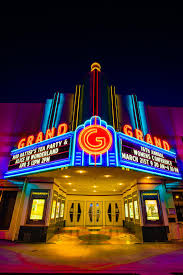
The Grand Theatre offers a variety of programs to the community, contributing to education, professional arts organization, performances and more, entertaining a large group of people in the city that can explore new opportunities or interests. The facility greatly enhances Tracy’s economic and social development.
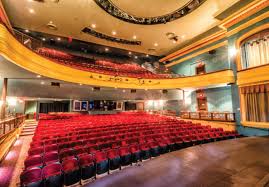
The Grand contains a 550-seater main stage, the Eleni Kounalakis Theatre, which happens to be the original theatre from the 1920s, along with a 110-seater stage, labeled the Studio Theatre. The Grand strives to bring in a variety of individuals from around the community, including the addition of three art classrooms, one specifically for students and young children.
Besides art classrooms, the theater has four music studios, including one for voice work, another for percussion, one for strings and one for whatever instrument is chosen. Also, the Grand has a dance studio for individuals to learn and express themselves through dance along with dedicated art galleries. Specific galleries at The Grand showcase demonstrations, workshops, receptions, gallery talks and residencies. Each season exhibits various topics to provide an entertaining experience for the community. Annually, the season is scheduled from September to July. The gallery supports up-and-coming artists in the area and provides a space for people to practice their hobbies while exploring their curiosities.
While managing a building so historic and old, structural problems were anticipated to arise within The Grand. Detrimental issues such as roof leaks, equipment deterioration and the building’s overall age have caused its fair share of problems on any given day at The Grand. Therefore, it is important for a theater staff to communicate and adjust well to obstacles not only during a show, but days in advance to help conclude with a successful outcome for the plethora of events that happen each week.
Robert Tombari, the Cultural Arts Division Manager, believed his team flourishes when it comes to cooperating as a team. According to Tombari, there’s always obstacles to await that can derail a show or event. He credited the staff’s preparation and forward thinking as a key to both the team and theatre’s success.
“As I say, in theatre, anything that can happen will,” Tombari explained. “You have to be prepared for anything at all times. The staff is adaptable and able to do that, you know, we’re quick thinking.”
The staff has eight full-time staff members at the facility, with roles occupied by Valerie Pavlakis, Arts Education Coordinator, Randy Benitez, Cultural Arts Technical Supervisor, Grace Credo, Administrative Assistant, and many more. All these positions ensure that the facility is always operating smoothly. This way, the building is available to everyone who needs it, at any time.
“From Monday through Friday, 10 AM to six PM, it is completely open to the public, so any community member can come in, use our facilities, work here, and hang out,” Tombari continued. “It was designed in the idea that this would be an artistic expression that you could find yourself sitting and working in.”
Along with ensuring the functioning of the facility, the staff members cooperate heavily to ensure the functioning of a performance on show day. Obviously, star performers that show up regularly at The Grand don’t simply walk through the doors. Months of planning, discussions and negotiations must take place before a performer sets foot in The Grand.
“The conversations are usually had with: Staff both at the Grand and the City, Community Members, Grand Foundation, Presenting Committee…ETC. We look primarily at the community, what we think people will want to experience. We look at what students may want to enjoy here at the Grand,” Tombari explained.
Over the years, The Grand has hosted potential superstars and events such as Linda Ronstadt, LeeAnn Rimes, Louie Anderson, Soweto Gospel Choir, The Glenn Miller Orchestra, Beehive, Cabaret, John Heffron, RENT, Riders in the Sky, Peking Acrobats, Franc D’Ambrosio, SFJazz Collective, Robert Cray, Tony! Toni! Tone!, Drew Carey, Trace Adkins, Billy Bob Thorton & The Boxmasters, WAR, Big Bad Voodoo Daddy, Kevin Nealon, Blue Oyster Cult, Night Ranger, Blind Boys of Alabama, Zakir Hussain, Los Lobos, Lee Rocker, Jimmie Vaughan, Lula Washington Dance Theatre, The Spinners, Lonestar, All-4-One, Vaudeville Festival, Dia de Los Muertos Family Day, Haunted House, ArtWalks, Arts Month, Holiday Open House, Custom Guitar Exhibit, Artist Residencies, Open Mic Nights, Dr. Suess Birthday Party, Gatsby Redux, Y&T, POP2000, Jazz Nights, and Paint Nights.
Bermillo explained how the Theatre contacts performers ahead of time, along with how a small-town Theatre can draw what many might feel as big-time talent.
“We get in contact with either their (performers) manager or if the artists are managing themselves, we will get in contact with them,” Bermillo said. “Sometimes we will collaborate with a group; we will do a co-presented event. We have a rental program as well, and people will request to rent the space to do performances.”
Some performers do pay for the space through the rental program. The Grand gets a percentage of the ticket sales and a rental fee in these instances.
An example of a co-presented event was from earlier this year, the POP2000 tour, which gave a memorable throwback to early 2000s pop music. The concert was hosted by one of NSYNC’s stars, Chris Kirkpatrick, earlier this year.
Co-presents are events that the staff/Grand wouldn’t normally be able to have as a part of their season, and or, serve as a community in need. If there is a need for the event to happen and there are nonprofits that want to “present” but cannot afford the space, The Grand will work with them on ensuring that they can use the space.
“We always want more art, more shows, and more engagement from the community,” Tombari said. “This facility is the community’s Grand Theatre Center for The Arts. The community is at the heart of everything we do.”
There are two more ways that companies work with the Grand’s season; Presenting and Residency. Presenting is when The Grand makes an offer and pays performers a flat fee, percentage, or door split depending on the show. Residencies are with companies that are always in the season. They either rent space and perform for free, or they are under a contract where The Grand, get a share of the ticket sales, a rental fee, or a little bit of both.
According to Bermillo, the staff works hard to plan and prepare for events, sometimes over a year in advance. Granted, there are many factors that go into executing a successful project or event.
“We figure out how to schedule around other performances, because some artists are on tour, so they’ll only have a certain date that they are available,” Bermillo clarified.
The City of Tracy provides the budget for all the programming, and the Theatre’s team strategizes how to accommodate it. With every performer and event costing different amounts of money, the budget can get tight at time. According to Bermillo, there’s a balancing act between inviting different styles of performers and holding events versus how much money the city has budgeted for The Grand.
“Occasionally, if an artist wants to come in, desperate to use our space, but they’re not within budget, we try to find different ways to financially support it,” Bermillo added.
After consulting with the team, Tombari has the final sample of what shows get approved.
Shaleila Loera, the Box Office Coordinator, reveals how the team decides which space to use for different events.
“It all depends on how big the show is and what stages it can fit. In our studio theater, typically, we have open mic nights, comedy nights, jazz nights, things of that nature,” Loera explained. “The bigger performances tend to be in the [main stage] for, like, concerts.”
The Grand Theatre’s nonprofit sponsor, the Grand Foundation, has an option to get pre-sale tickets for the shows. They have different membership levels to sign up for, ranging from about 50-2,000. This allows guests to be prepared when they arrive for the performance.
“We typically open an hour before showtime, to the lobby. And then 30 minutes, if [the performers] are done rehearsing, to be seated,” Loera said.
Some shows have reserved seating, while others have general emission of seating.
 Besides managing the facility and ensuring performances run smoothly, there is a workload that goes into endorsing the best audience for every show.
Amanda Trask, the Marketing Coordinator, clarifies how the Theatre markets their programs to Tracy’s small-town market.
“Every single show we have a different demographic, Trask said. “We work with multiple radio and digital companies, plus we do social media. Depending on if it’s a rental, co-present, a presenting season, or a resident company, all that marketing is different.”
There are many different methods and strategies to market, according to which type of show it is, and Trask shared a few.
“The main ones are radio campaigns, paid advertising, organic advertising, and email blasts,” Trask informed.
The Theatre staff work exceptionally hard to bring out the best that they can offer to the community. Not only is it important for the people to have this facility open to them, but it is also an honored experience as a staff member.
With a diverse range of people in Tracy now, it is important for people to have a space to communicate and celebrate their connections and differences.
“Language doesn’t always resonate with everybody, but art does. Music does,” Bermillo added.
Since Tracy has a wide population of Hispanics, the Grand does their best to embrace that, and it has been greatly integrated into their programming. Community members can feel free to suggest and recommend artists, certain art classes, and events to take place, such as in celebrating Mexican Independence Day.
Overall, the Grand Theater Center for the Arts is a facility that provides an entertaining and educational experience for the community to enjoy. The staff aims to provide a space for everybody in Tracy to feel included and welcomed. This way, Tracy citizens can cooperate and help build a community of endless possibilities.